


 Roman T.
There is something almost unbelievable about the way nature occasionally produces a rock that looks exactly like something else. An elephant rock is precisely that kind of geological coincidence: a formation shaped over millions of years by erosion, volcanic activity, and wind and rain into the unmistakable silhouette of one of the world’s most recognizable animals. The trunk, the rounded body, the broad head, all carved not by human hands but by time itself.
What makes this even more interesting is that there is not just one such formation. There are several, scattered across different countries and continents, each with its own geological story, cultural context, and visitor experience. From the golden deserts of Saudi Arabia to the icy Atlantic coast of Iceland and the forested highlands of Missouri, elephant rock formations have quietly drawn travelers, photographers, and geology enthusiasts for years.
What Is an Elephant Rock Formation, and Why Do They Exist?
An elephant rock is a natural rock formation that, viewed from a specific angle, closely resembles an elephant. These formations are typically the result of differential erosion, in which softer material around a harder rock core wears away over time, leaving a rounded, organic-looking shape. The process can take anywhere from thousands to billions of years, depending on rock composition and the environmental forces at work.
The materials involved vary widely by location, and each responds to weathering in its own way:
- Iceland: Dark basalt, formed when lava cools rapidly after a volcanic eruption
- Saudi Arabia: Sandstone sculpted by centuries of desert wind erosion
- Missouri: Ancient pink granite, cooled from magma deep underground and exposed over 1.5 billion years
- Thailand: Sandstone shaped by the same slow erosion processes found across Southeast Asia
The fact that multiple unrelated locations have produced strikingly similar animal-shaped formations speaks to the consistency of natural erosion. It is a repeatable outcome that happens whenever the right rock, the right environment, and enough time come together.
Elephant Rock AlUla, Saudi Arabia: The Desert Showstopper
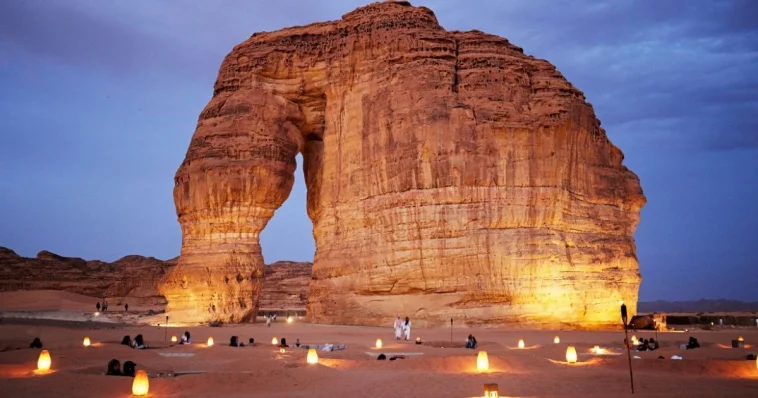
Of all the elephant rock formations in the world, the one in AlUla, Saudi Arabia, is arguably the most dramatic. Known locally as Jabal AlFil, which translates to “Elephant Mountain,” this colossal sandstone monolith rises 52 metres from the desert floor. Millions of years of wind and rain have sculpted it into the unmistakable silhouette of an elephant, complete with a curving trunk and a broad, rounded body.

What sets AlUla apart is not just the geological spectacle but the entire experience built around it. As the sun sets, the site transforms into a vibrant social space with fire pits, outdoor seating, food vendors, ambient lighting, and music. Visitors can grab a burger and a shake from the SALT food truck on-site, settle into the sunken seating areas, and watch the sandstone shift from amber to deep red as the light fades.
Visitor essentials:
- Entry: Free; site opens daily at 17:00, timed perfectly for golden-hour photography
- Access: A wooden boardwalk connects the car park to the main viewing area, making it wheelchair accessible
- Getting there: A 20-minute drive northeast of AlUla Old Town via Highway 70, with free parking on site
- Flights: AlUla is served by Prince Abdul Majeed bin Abdulaziz International Airport, with connections on Saudia, Flynas, flydubai, and Qatar Airways from Riyadh, Jeddah, Dubai, and Doha
Beyond the rock itself, ancient rock carvings and inscriptions on Jabal AlFil’s surface date back to early civilizations, offering a visual narrative of the region’s history alongside the geological spectacle. Pairing a visit here with nearby Hegra, Saudi Arabia’s first UNESCO World Heritage Site, makes for one of the most complete heritage-and-nature days available anywhere in the Arabian Peninsula. Combined tours can be booked through GetYourGuide or Viator, with prices starting at around SAR 200-350 per person.
Elephant Rock, Iceland: The Volcanic Sea Giant
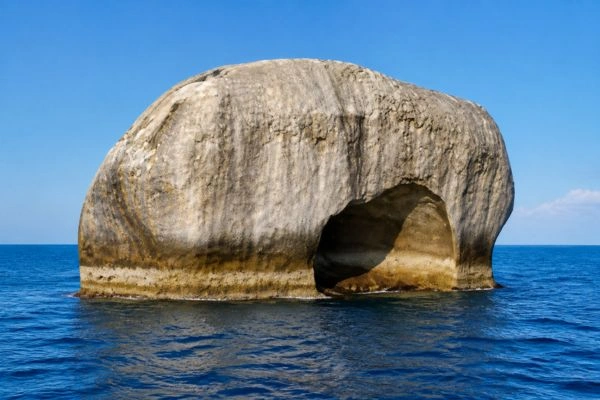
Iceland’s version of Elephant Rock is entirely different in character, setting, and geology, yet equally jaw-dropping. Located on Heimaey, the only inhabited island in the Westman Islands archipelago, this formation was created by ancient volcanic eruptions and shaped by centuries of wind and Atlantic waves. Its dark basalt and deep grooves closely resemble the wrinkled skin of a real elephant.

The rock sits at the base of cliffs on the northwest coast of Heimaey, so it cannot be reached by car or on foot. The only proper way to experience it is from the water. From a boat, the resemblance to an elephant dipping its trunk into the sea is immediate and almost disorienting. It does not require imagination or squinting. It simply looks like an elephant.
Getting there and what to expect:
- Boat tours: Ribsafari and Viking Tours both offer circle-island trips that provide a head-on view of the formation; tours run approximately 7,000 to 10,000 ISK and last one to two hours
- Best season: May to September, when boat tours operate regularly, the seas are calmer, and daylight stretches up to 20 hours
- Ferry:The Herjolfur ferry departs from Landeyjahöfn and takes approximately 35 minutes to reach Heimaey
- Flights: Icelandair operates domestic flights from Reykjavik City Airport in just 25 minutes
While on Heimaey, the Eldheimar Volcano Museum tells the story of the 1973 Eldfell eruption that forced the island’s entire population to evacuate overnight, with preserved homes still buried under ash on display. Puffin colonies along the coast are among the most accessible in Iceland during the summer months, making a full island visit genuinely rewarding for wildlife and history fans alike.
Elephant Rocks State Park, Missouri: The Billion-Year-Old Boulders
Missouri might not be the first place that comes to mind for world-class geology, but Elephant Rocks State Park in the southeastern part of the state is the kind of discovery that genuinely changes that impression. The formations here are giant boulders of Graniteville Granite, a medium- to coarse-grained alkali granite formed 1.5 billion years ago, standing end to end across the landscape of the Saint Francois Mountains like a train of circus elephants.

Before reaching the surface, groundwater weathered the granite along fracture joints, creating rounded corestones embedded in softer material. Surface runoff later eroded the softer material, leaving the boulders perched exactly as visitors find them today. The largest boulder in the park, known as Dumbo, weighs around 680 tons, making it one of the more extraordinary single rocks visitors can legally stand on anywhere in the United States.
What to see and experience in the park:
- Braille Trail: A 0.9-mile paved loop through the heart of the formations, and Missouri’s first trail designed for visitors with visual and physical disabilities, with interpretive signs featuring Braille text
- Fat Man’s Squeeze: A narrow gap between two massive boulders that visitors can squeeze through
- The Maze: A scattered field of boulders forming natural rooms and passages worth exploring
- Granite Quarry Ruins: The site where Missouri Red granite was cut for landmarks, including the piers of the historic Eads Bridge in St. Louis
Practical details:
- Entry: Free; open year-round; leashed pets welcome
- Location: About four miles north of Pilot Knob off Highway 21
- Nearby parks: Johnson’s Shut-ins State Park and Taum Sauk Mountain State Park are both worth combining into a full-day trip in the region
Elephant Rock in Thailand: The Hidden Formation Inside Phu Sing Forest Park
Less well-known but equally worth mentioning is the elephant rock formation in Phu Sing Forest Park, Bueng Kan province, northeastern Thailand. This sandstone formation, shaped like an elephant’s head by the same forces of erosion found elsewhere on this list, sits within the same park complex as the famous Three Whale Rock, known locally as Hin Sam Wan.
Many visitors who make the trip to see the whale-shaped formations never realize there is an elephant rock in the same park. It sits at a separate viewpoint and is included in the guided pickup truck tours that take visitors around the park. The combination of both formations in one visit, along with sweeping views of the Mekong River and the forested mountains of Laos in the distance, makes Phu Sing one of the most geologically diverse park experiences in all of northeastern Thailand.
How to visit:
- Entry fee: 100 THB per person
- Pickup truck tour: 500 THB per vehicle; drivers are local park rangers who navigate the steep forest roads to each viewpoint
- Location: About 25 kilometers southeast of Bueng Kan town
- Hours: Open 5:00 AM to 5:00 PM daily; arriving early is recommended for sunrise light and cooler temperatures
- Tour duration: A full park tour takes roughly two to three hours and is one of the most affordable nature outings in the entire Isan region
Photography Tips: Getting the Best Shots at Every Location
Despite being on different continents and formed from entirely different materials, all of these elephant rock formations share one important thing for photographers: the best images come during the golden hour, when low-angle light picks out the texture and depth of the rock surface in a way that flat midday light cannot.
- AlUla, Saudi Arabia: Arrive at opening time around 17:00 to catch the sandstone as it shifts from amber to deep red in the fading light
- Westman Islands, Iceland: Book a late evening boat tour in summer, when the lingering daylight creates long shadows across the basalt
- Elephant Rocks State Park, Missouri: Early morning works best when the forest is quiet, and the pink granite catches the first warm light of the day
- Phu Sing Forest Park, Thailand: Arrive at opening (5:00 AM) for the clearest air, softest light, and the most comfortable temperatures before the midday heat sets in
Quick-Reference: Visitor Information at a Glance
| Location | Entry Cost | Best Season | Key Operator or Transport |
|---|---|---|---|
| AlUla, Saudi Arabia | Free | Year-round (opens 17:00) | SALT food truck on site; flights via Saudia, Qatar Airways |
| Heimaey, Iceland | Tour cost: 7,000-10,000 ISK | May to September | Ribsafari, Viking Tours; Herjolfur ferry |
| Missouri, USA | Free | Year-round | Self-drive; Highway 21 near Pilot Knob |
| Bueng Kan, Thailand | 100 THB + 500 THB tour | November to February | Park ranger pickup trucks; 25 km from Bueng Kan |
Frequently Asked Questions
- What Is An Elephant Rock?
An elephant rock is a natural geological formation resembling an elephant, typically formed over millions of years by erosion, volcanic activity, or weathering. These formations appear on multiple continents, each composed of different rock types shaped by distinct environmental forces.
- Where Is The Most Famous Elephant Rock In The World?
The most internationally recognized is Jabal Al Fil in Al Ula, Saudi Arabia. Standing 52 metres tall in the desert and illuminated at night with ambient lighting and fire pits, it has become one of the most photographed natural formations in the Middle East. Iceland’s Elephant Rock on Heimaey Island is also widely known, particularly after images went viral on social media.
- How Was Elephant Rock In Iceland Formed?
It is a basalt formation created by volcanic eruptions that built up lava flows along Heimaey’s coast, which then cooled and hardened. Over thousands of years, Atlantic waves and coastal erosion shaped the basalt into its distinctive elephant-like form. Most geologists estimate it is around 15,000 years old.
- Can You Climb On The Rocks At Elephant Rocks State Park?
Yes, climbing on the granite boulders is permitted and encouraged. The park is set up for exploration, with trails weaving through and between the formations. Visitors should be aware of steep drop-offs in some areas and keep a close eye on children. The Braille Trail provides a fully accessible paved route around the main formations for those who prefer not to climb.
A Global Marvel of Natural Architecture
Elephant rock formations are among nature’s most quietly spectacular achievements, each one shaped over unimaginable stretches of time by forces that had no intention of creating anything at all. Whether you plan to watch the sun set over sandstone in Saudi Arabia, circle volcanic cliffs by boat in Iceland, climb billion-year-old granite in Missouri, or hike forest roads in northeastern Thailand, each of these sites delivers something genuinely worth the journey.